DEFiNE and Polar Engineering run on it — a small fleet of agents, each with one job, sharing one record of the work.
Every part of the practice routes through the same system — from the first inquiry to the last invoice.
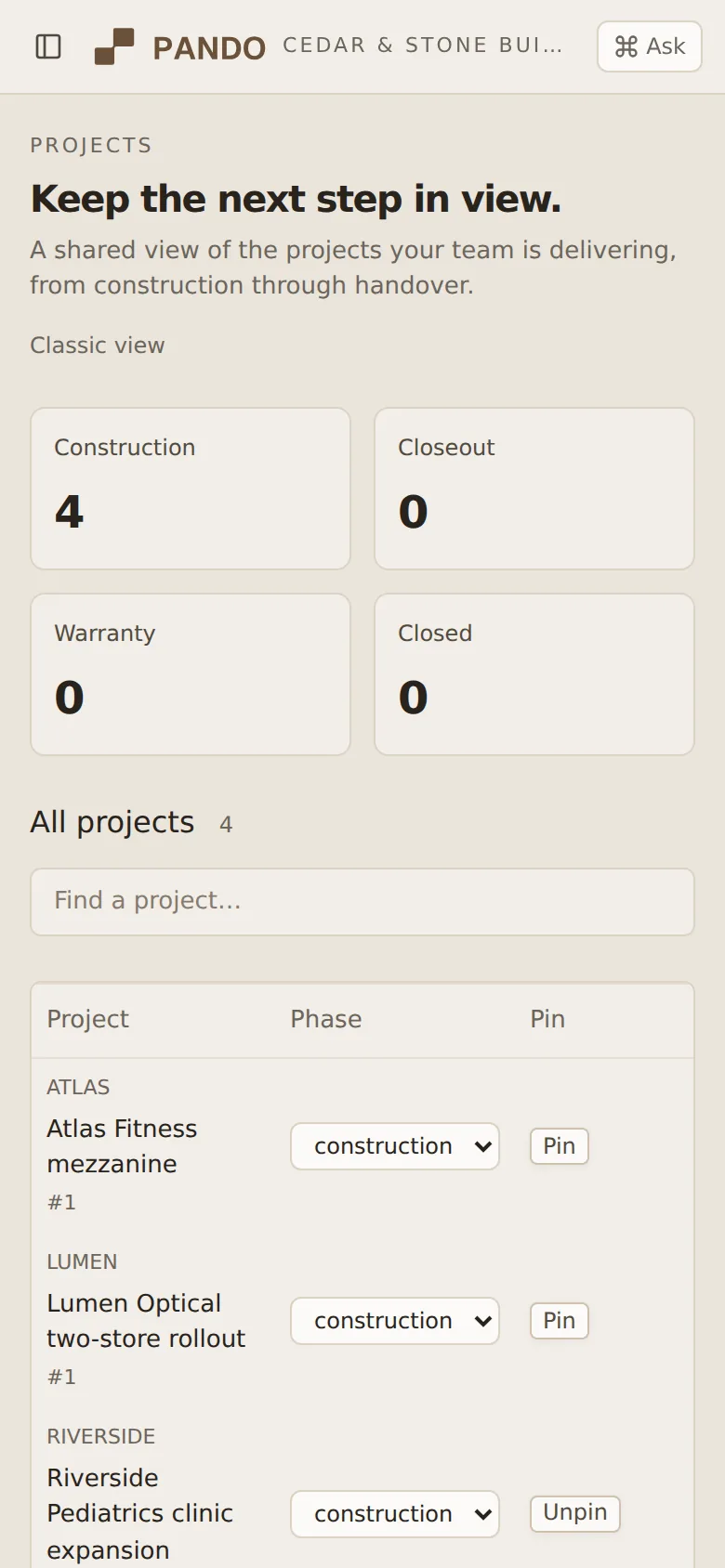
Drawings, RFIs, change orders, milestones, dollars owed — one project record carried through the whole lifecycle.
Voicenotes, photos, texts, emails — every channel from the field lands in the right project record without manual filing.
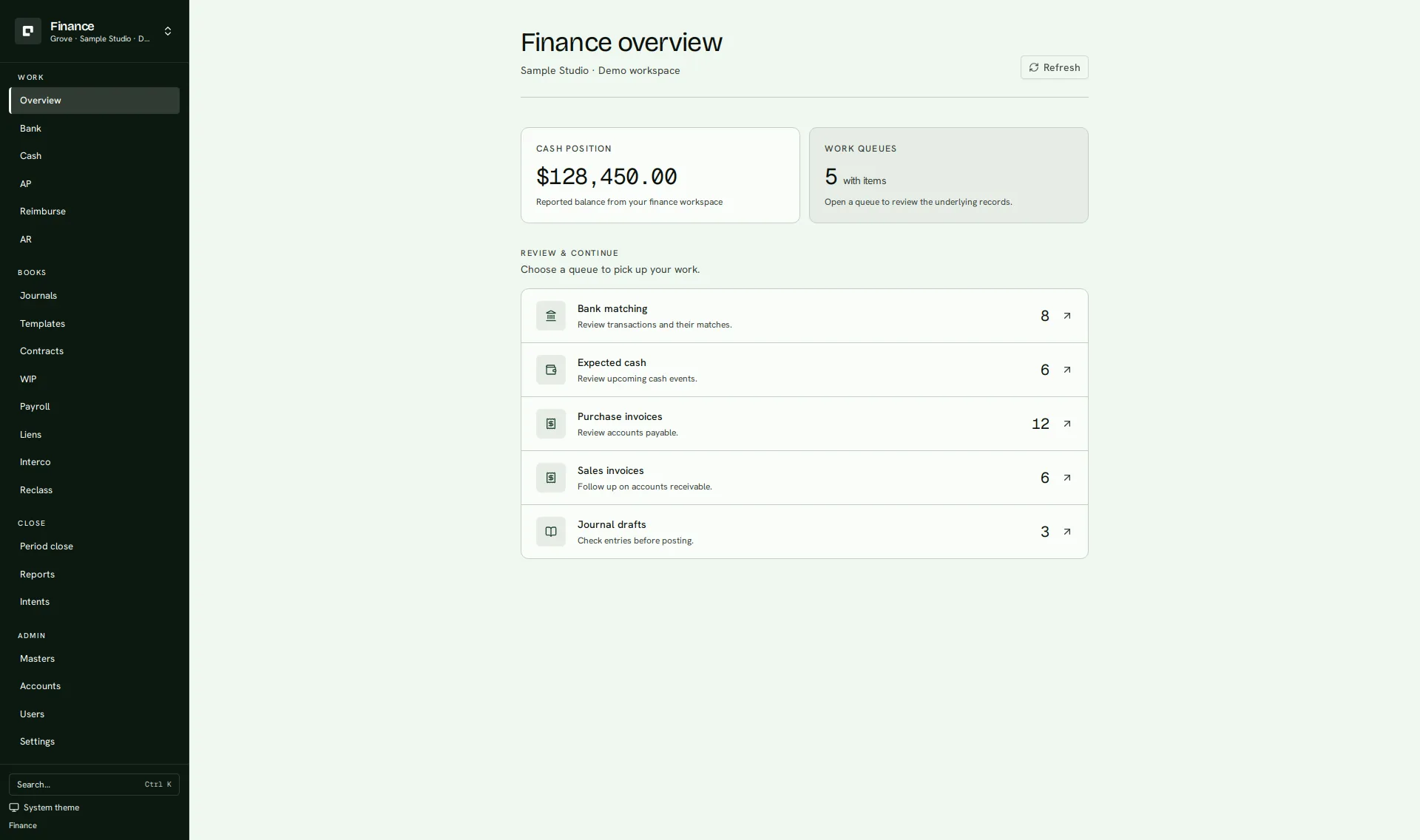
Books for every entity, every dollar tied to a job, reconciled overnight.
Drafted, reviewed, redlined, and signed without leaving the system.
Payroll, time, certifications, insurance — and the vehicles and tools that go with them.
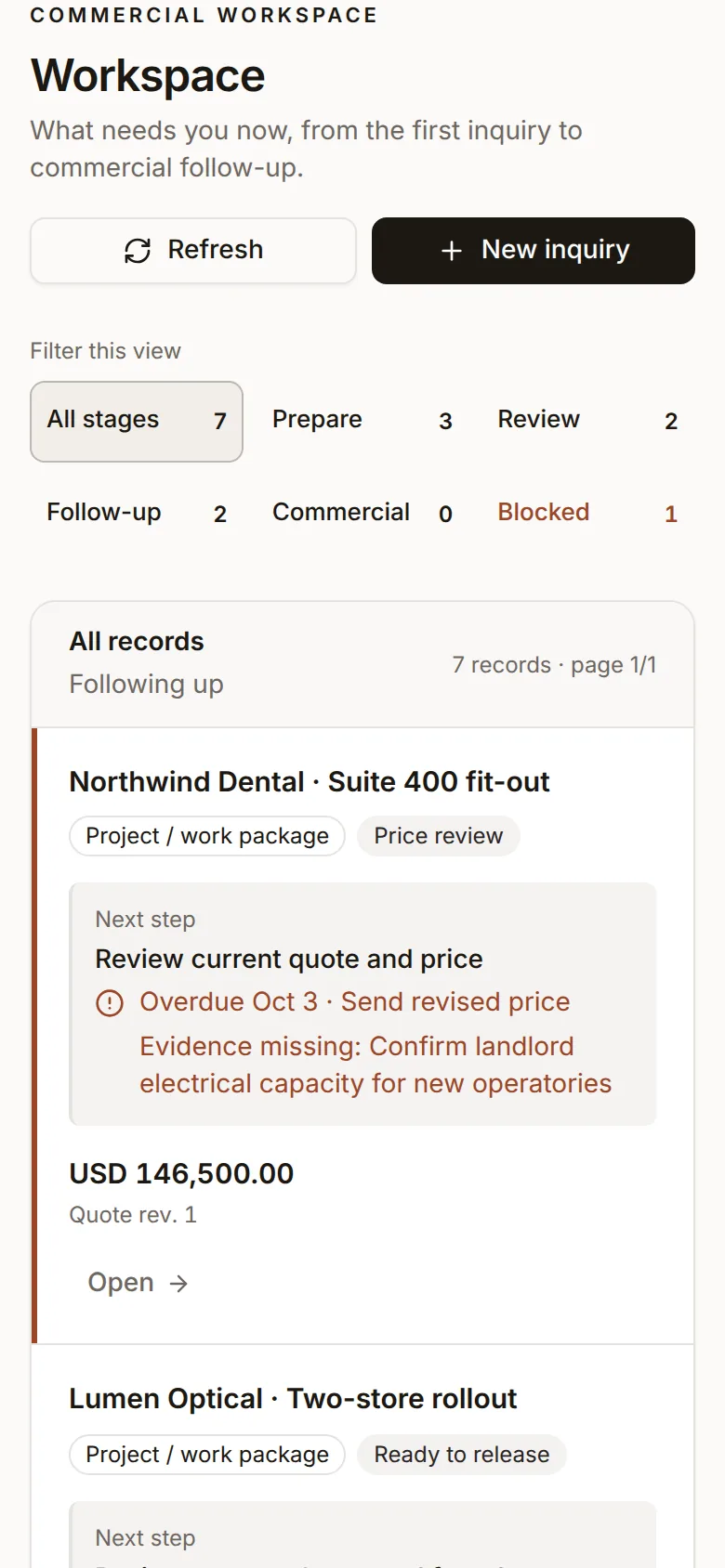
Estimates, quotes, and bids drafted and tracked. Every assumption shown.
Purchase orders, vendor history, price tracking. Every receipt tied to a job.
Briefs, reports, and notifications drafted from the practice's own records.
What goes in stays available — without being filed by hand.
Every inbound channel — voicenote, email, photo, message — lands in the system without sorting.
Each fact goes to one canonical substrate. Projects, money, contracts, people, vehicles each have a home. Nothing duplicated.
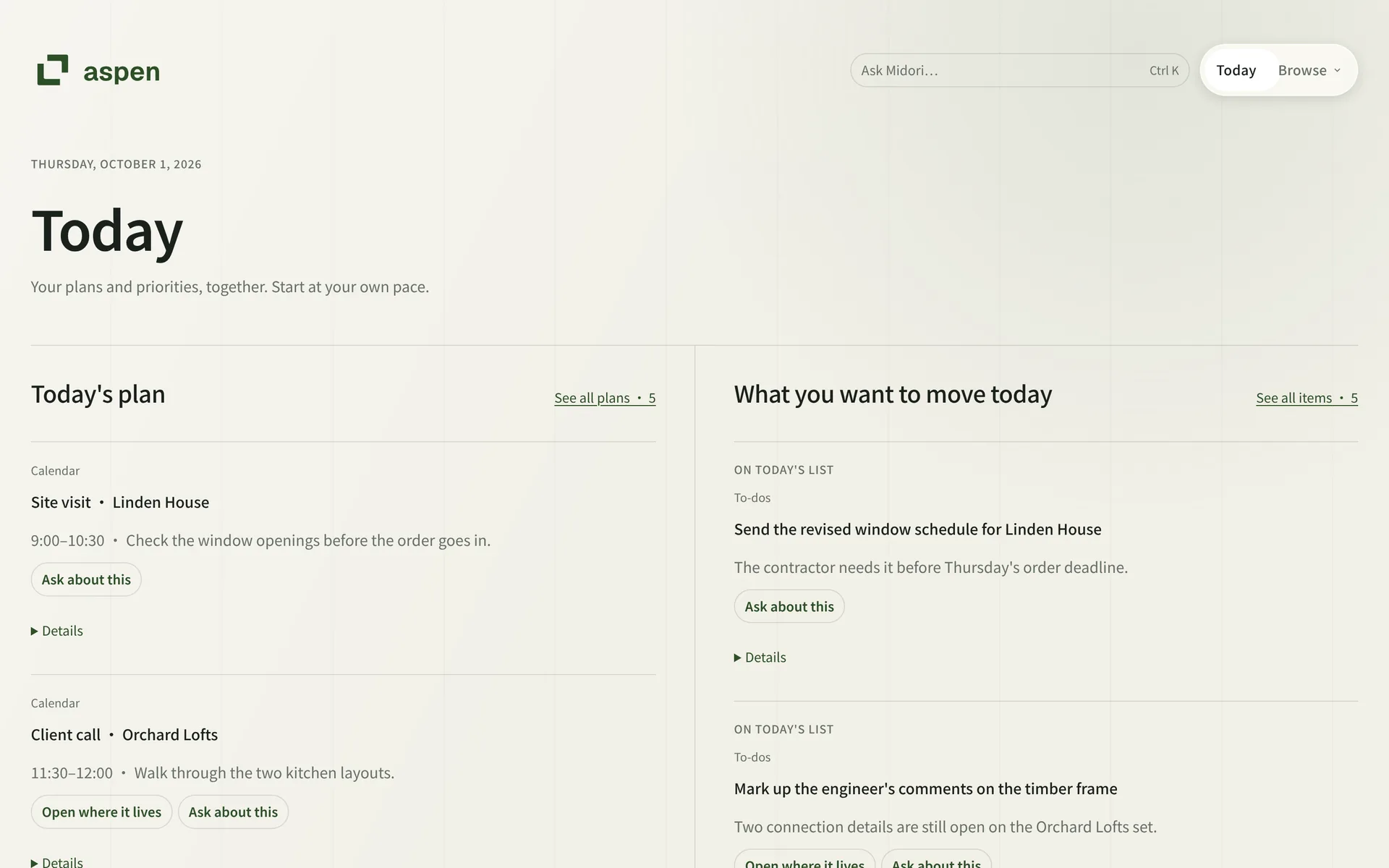
When you start a brief or draft, the system reads back the relevant prior context. No search needed.
Agentic engineering means treating AI as engineering material — not as a chatbot. An agent is a program that pursues a goal, remembers what happened, and uses real tools to act in the world.
The boundary between human work and agent work stays explicit: anything that needs judgement belongs to a person. Everything else can be agent work.
Two practices in different roles, on the same system. Each uses the parts that match its work.
Design, development, construction. Ground-up residential, retail rollouts, commercial fit-outs.
Professional engineering. Permit filings, structural reviews, inspections, existing-condition reports.